
 Reprinted from ODN 40th Anniversary Summer Festival
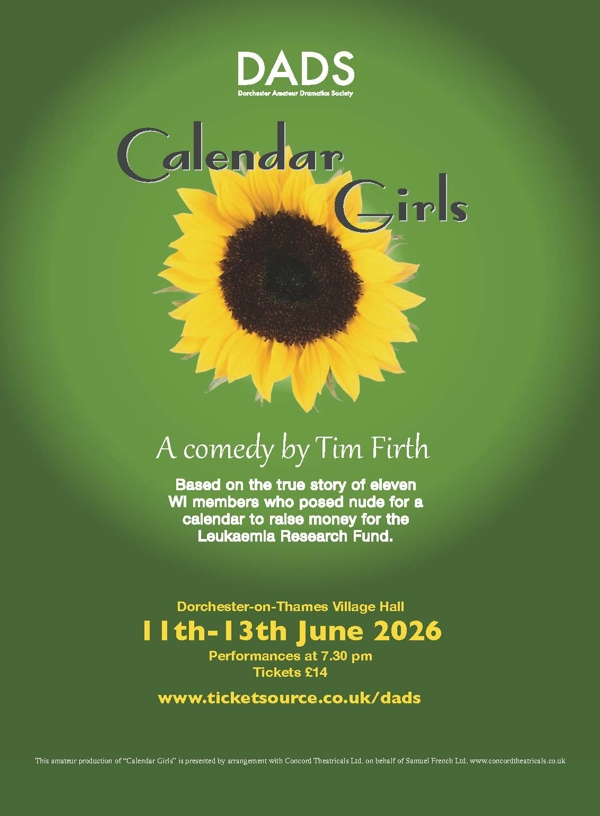
Dorchester Amateur Dramatics Society
Calendar Girls by Tim Firth
Saturday 13th June
Based on a remarkable true story, Tim Firth’s Calendar Girls follows a group of Women’s Institute members from a Yorkshire village who decide to create a nude calendar to raise money for leukaemia research. What begins as a light-hearted fundraising idea develops into a touching story about friendship, loss, courage and the strength of community. The play is packed with humour and memorable characters, but it also asks audiences to reflect on grief and the importance of supporting one another through difficult times.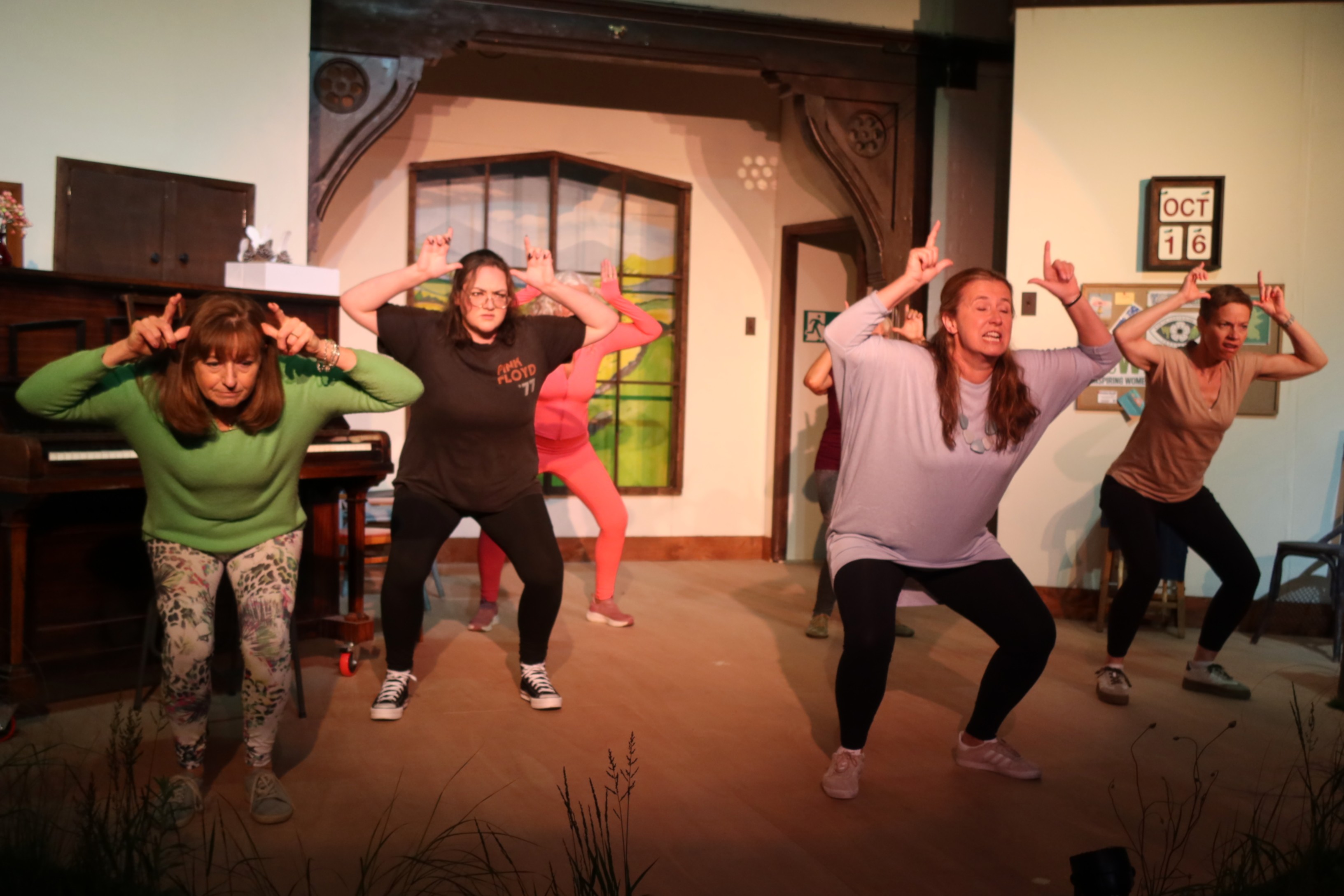
Before a single line was spoken, DADS’ set established exactly where we were. The stage had been transformed into a convincing Yorkshire village hall, complete with upright piano, simple furniture and an impressive picture window overlooking a beautifully painted view of the Yorkshire Dales. The window provided an attractive focal point throughout the performance, while the grasses, stonework and rustic fencing at the front of the stage helped extend the world of the play beyond the hall itself and created a strong sense of place.
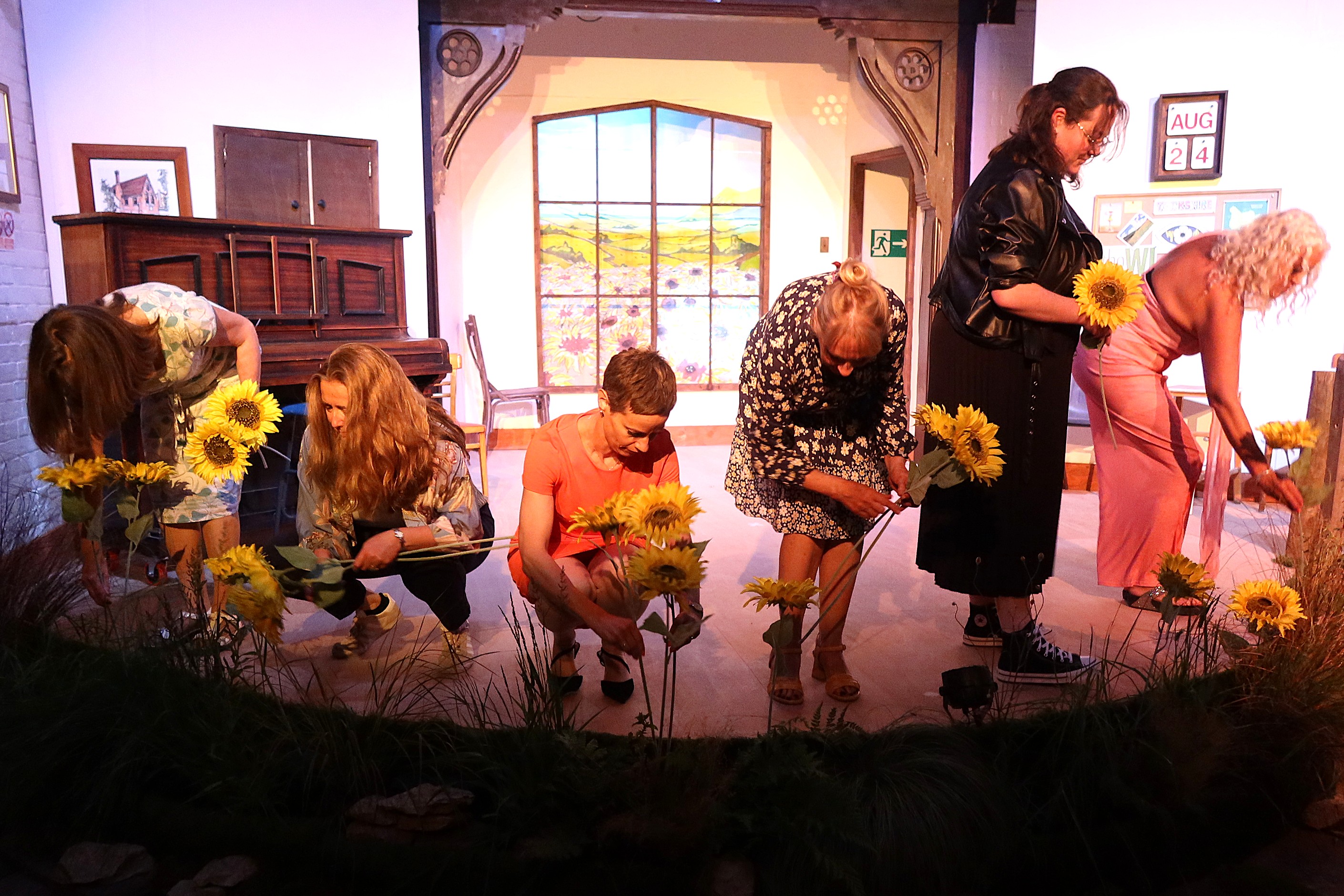
Particularly impressive was the versatility of the design. Within a very limited performance space, the set successfully represented a range of locations, including the village hall, the Yorkshire Dales, a village fete, a WI conference and even a film studio. The open staging allowed scenes to flow smoothly, while the appearance of sunflowers across the front of the stage at the end provided a simple but moving representation of John’s seeds coming into bloom. Given that DADS must construct its own stage before even beginning work on the set, the result was both imaginative and highly effective.
 The lighting and technical effects were well handled throughout the production. A particular highlight was the deliberately dull slide presentation, where projected coloured lighting over the audience cleverly reflected the vegetables being discussed, adding an extra layer of humour to the scene. The power cut sequence was effective too, although the stage lights went out slightly before the projector image, making the effect momentarily less seamless. This was, however, a very minor point.
The sound team also deserve credit for their work. Sound effects were well judged throughout – the car crash particularly well timed when Chris took her top off! – while the PA system used during the WI conference scenes, complete with echo and the occasional hint of feedback, perfectly captured the atmosphere of a large council meeting.
The choice of transition music was generally strong and often helped maintain the pace between scenes. Where it accompanied the full scene change, it worked particularly well. There were a few occasions where the music finished before the transition was complete, or where no music was used at all. This is perhaps an area that could be developed further in future productions, as consistent use of music can help smooth scene changes and maintain the flow of a performance. Audiences are rarely aware of it when it is done well, but a sustained musical bridge can prevent blackouts from feeling prolonged and keep the energy of the production moving forward. Nevertheless, these were small observations within an otherwise technically accomplished production.
Costumes were well chosen throughout and helped define the characters from the moment they stepped onto the stage. Cora’s Led Zeppelin T-shirt was a lovely touch, instantly signalling her rebellious streak, while Celia’s bright and colourful outfits perfectly reflected a woman who enjoys standing out from the crowd. Marie was also smartly dressed, although I perhaps would have liked to have seen her first outfit lean a little more towards formal WI chairperson attire. Given her pride in standards, protocol and doing things properly, a slightly more structured look might have added even more gravitas as she prepared to welcome an important visitor. That said, this is a very minor observation.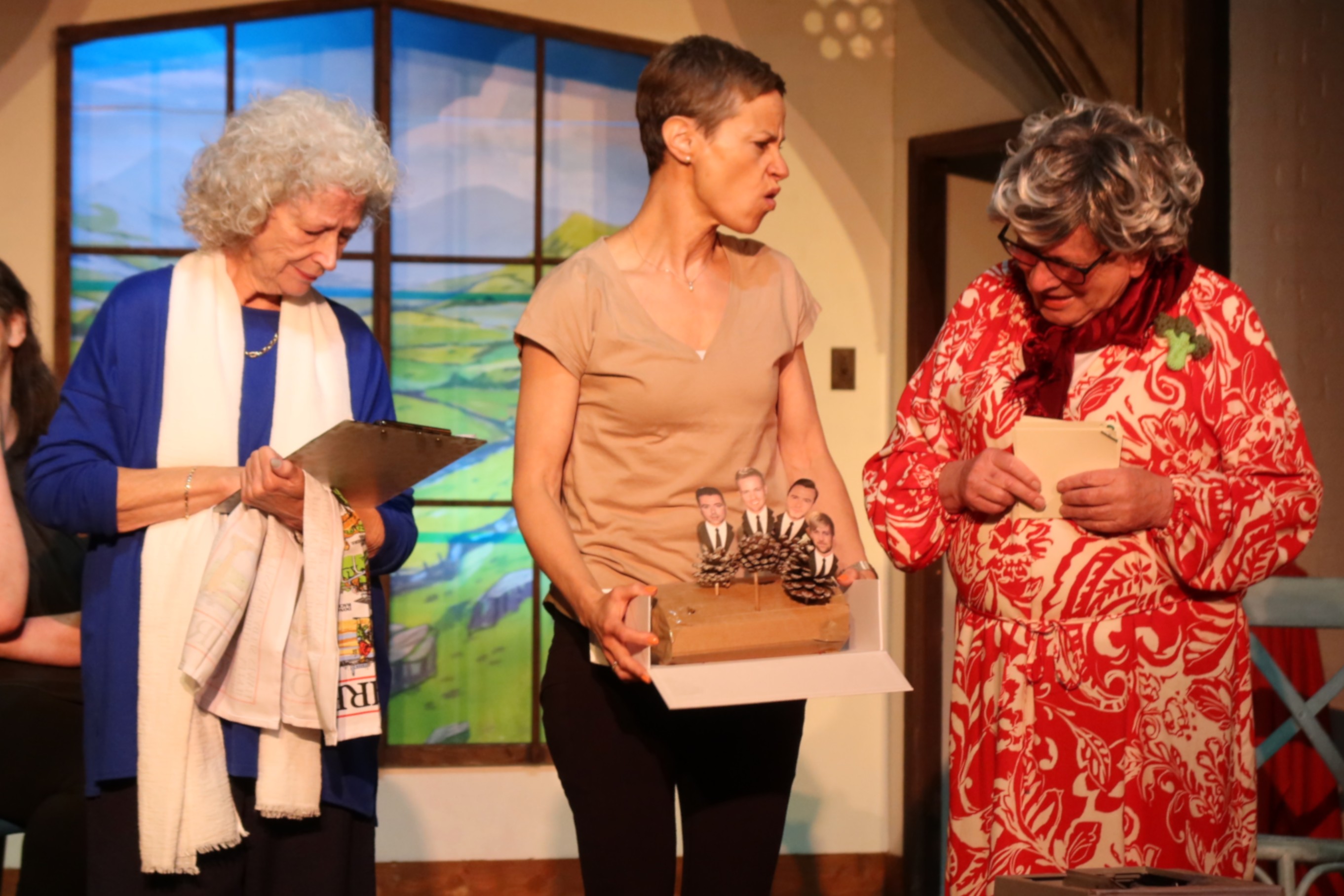
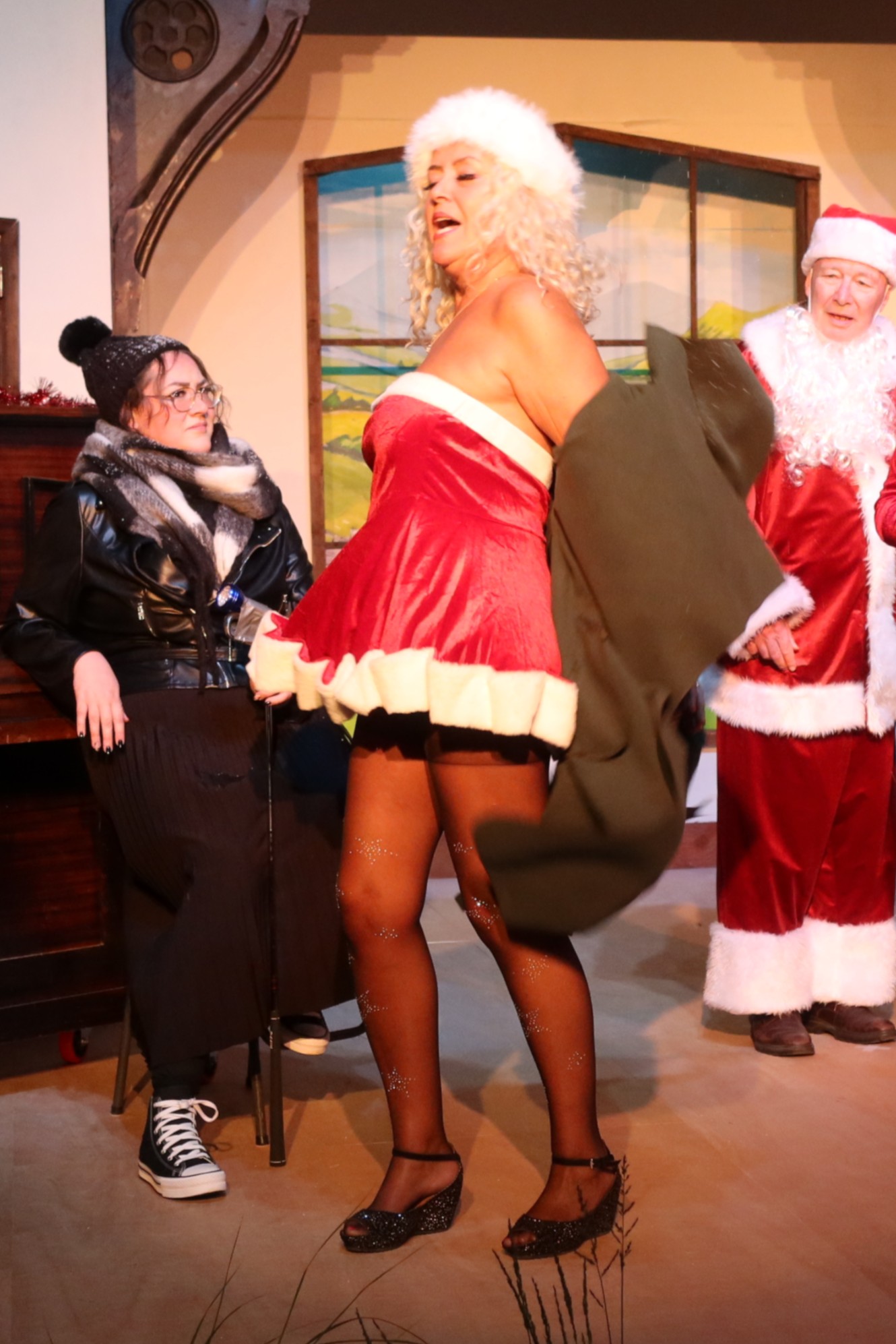
The costume department also clearly enjoyed some of the play’s more comic moments. The escalating battle of the Christmas outfits between Celia and Chris was revealed with great gusto and drew plenty of appreciative laughs, while Ruth’s wonderfully eccentric “mouse, gerbil, ferret, bunny” outfit proved to be another memorable visual gag that landed exactly as intended.
At the heart of Calendar Girls are the relationships between its characters, and Hayley Poole’s direction ensured these remained at the heart of the production throughout.
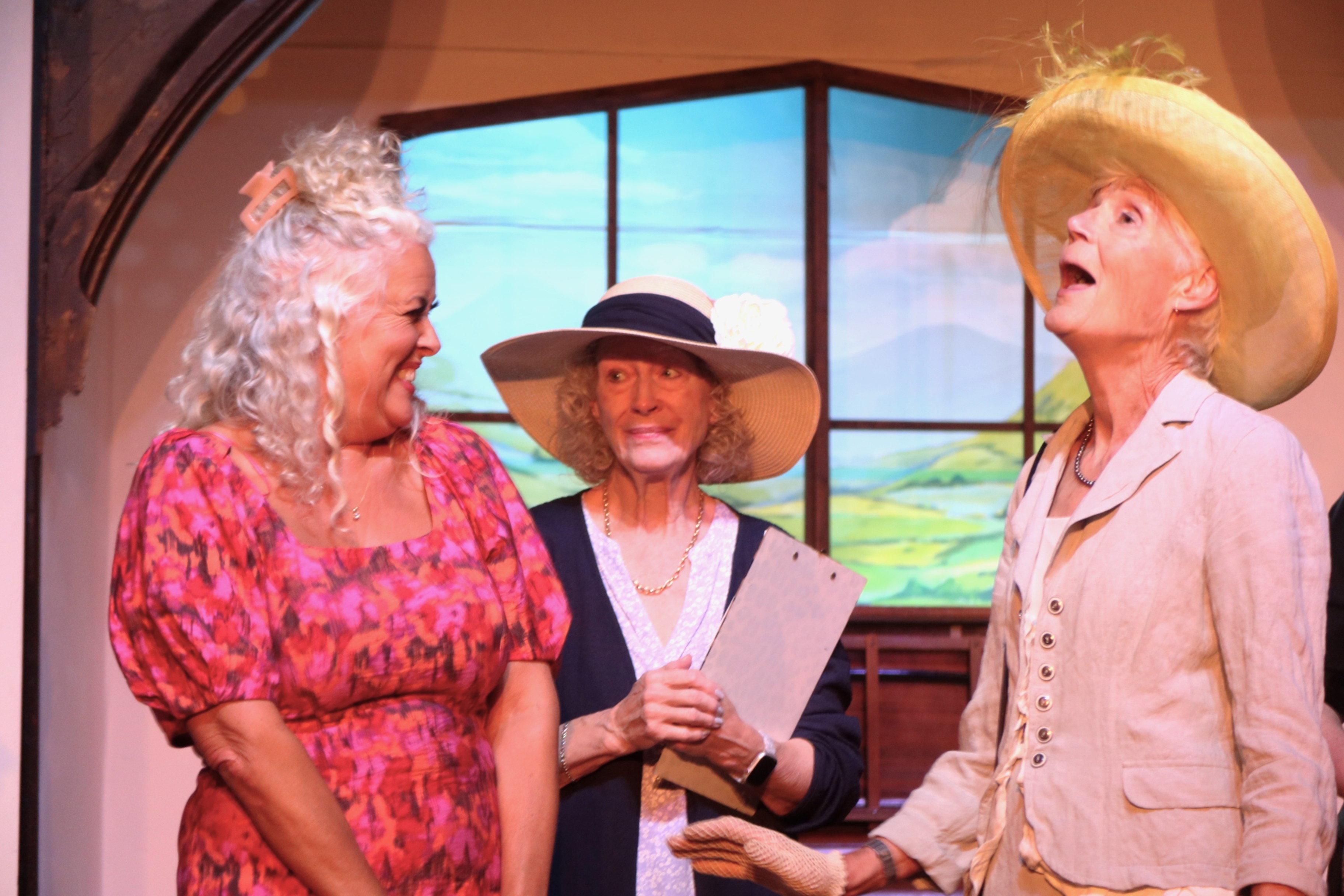 The opening Tai Chi scene was particularly effective in establishing the characters. Within just a few minutes, the audience had a clear sense of each woman’s personality through their banter and interactions, providing a strong foundation for the story that followed. Throughout the production, the cast used the stage confidently and worked well together as an ensemble, maintaining a pace that kept the audience engaged from start to finish.
There were also some beautifully handled emotional moments. The transition from John’s speech to the image of the empty wheelchair, before the speech was continued by Annie and Chris, was especially poignant. It was a touching piece of staging that captured the impact of John’s loss. If anything, allowing the moment a little more time to breathe might have made it even more powerful, particularly as it followed one of the play’s more energetic and comedic scenes.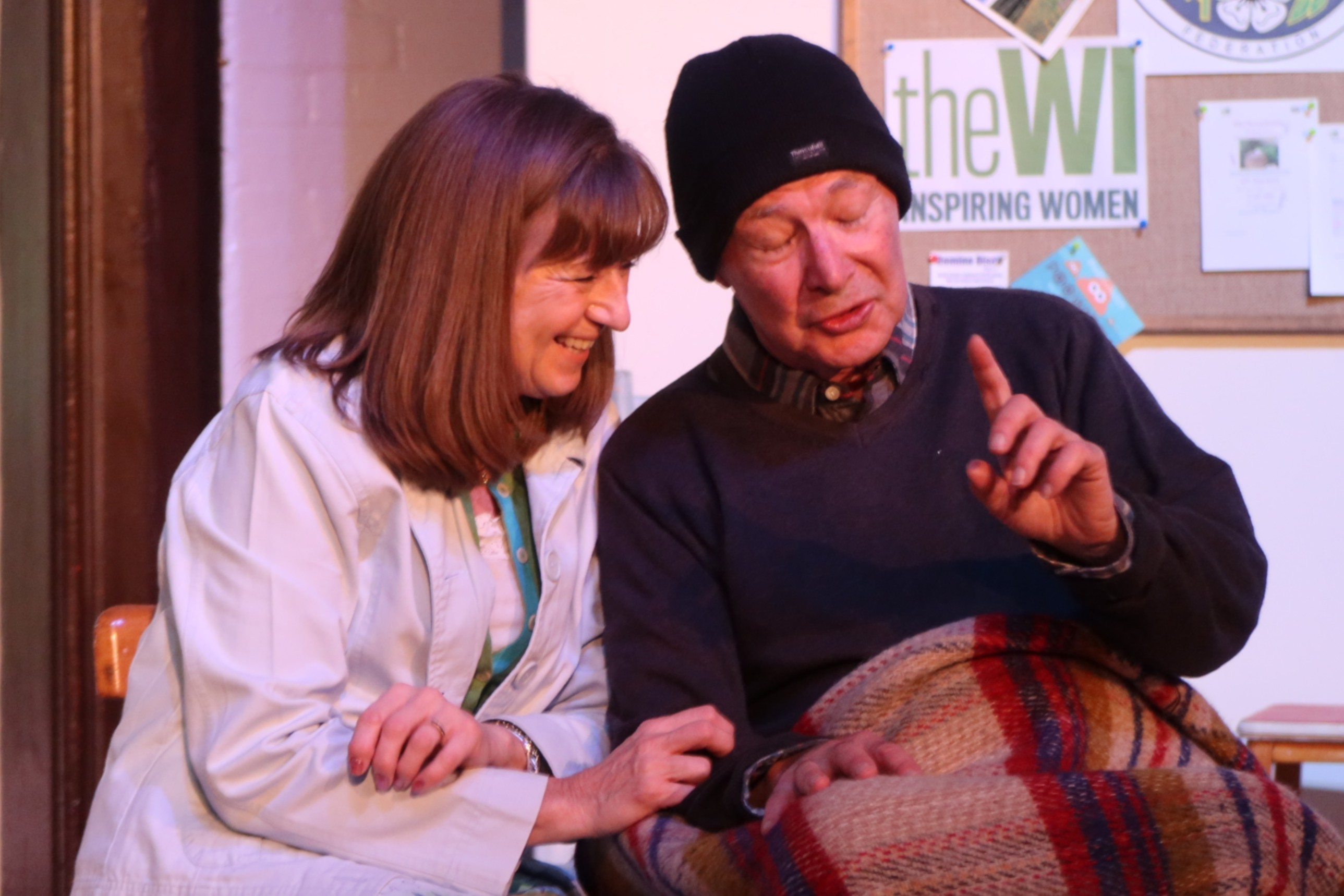
The calendar photography scene deserves special mention. This is a sequence that relies heavily on trust and teamwork, and the cast handled it with great sensitivity. It was an excellent example of ensemble acting and one of the production’s strongest moments and deservedly received applause after each photo was taken
DADS assembled a group of performers who clearly enjoyed working together and brought warmth and authenticity to their roles. Lucinda Kentick made an excellent Cora, delivering her character’s blunt observations with gusto and opening the show with a strong singing voice. Louise Aukland brought boundless energy to Chris, with strong vocal delivery and a genuine passion for the cause that shone through, particularly in her memorable address to the WI Council. While her energy served the comedy well, an occasional moment of stillness in the more emotional scenes might have added even greater impact to some of the play’s poignant moments.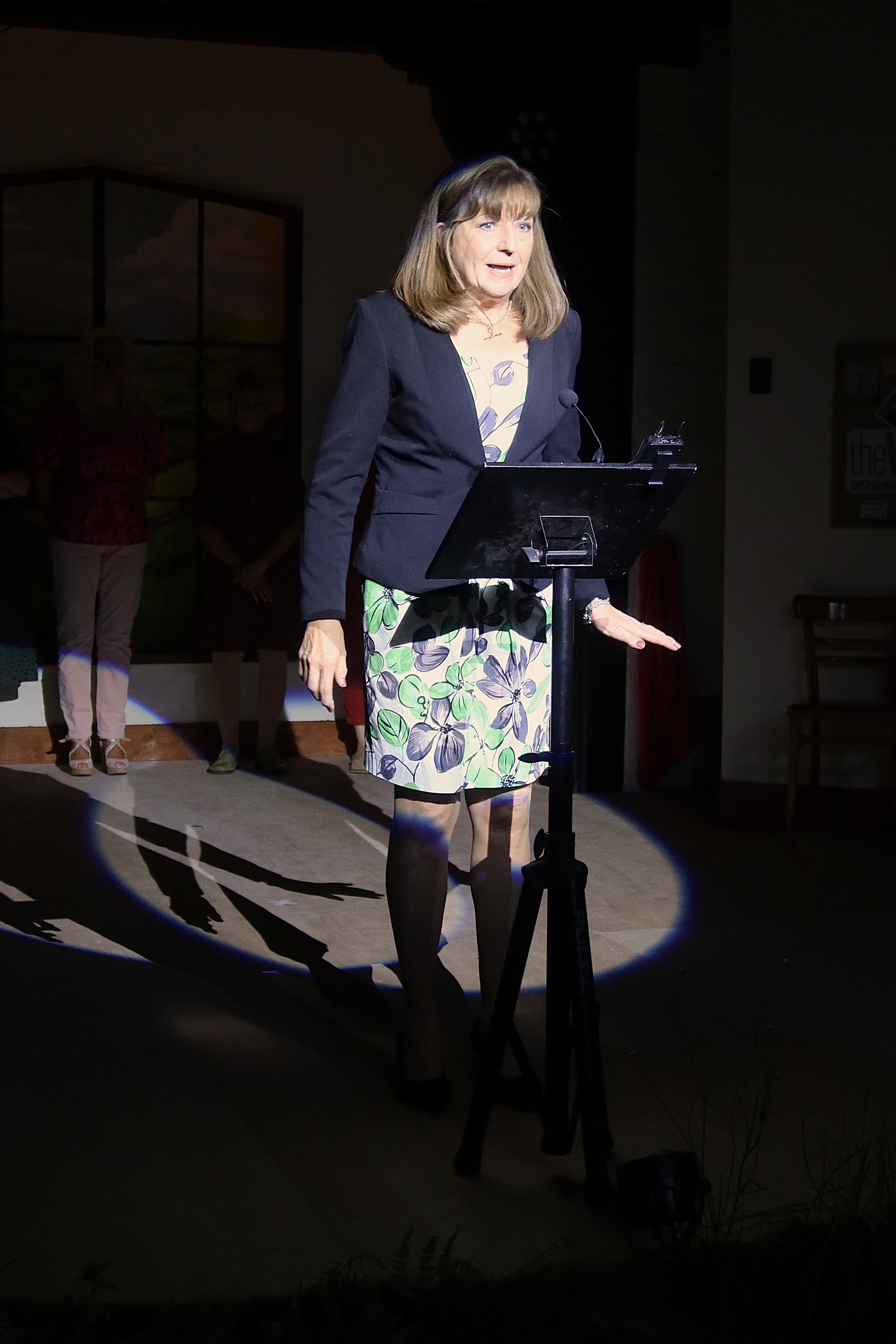
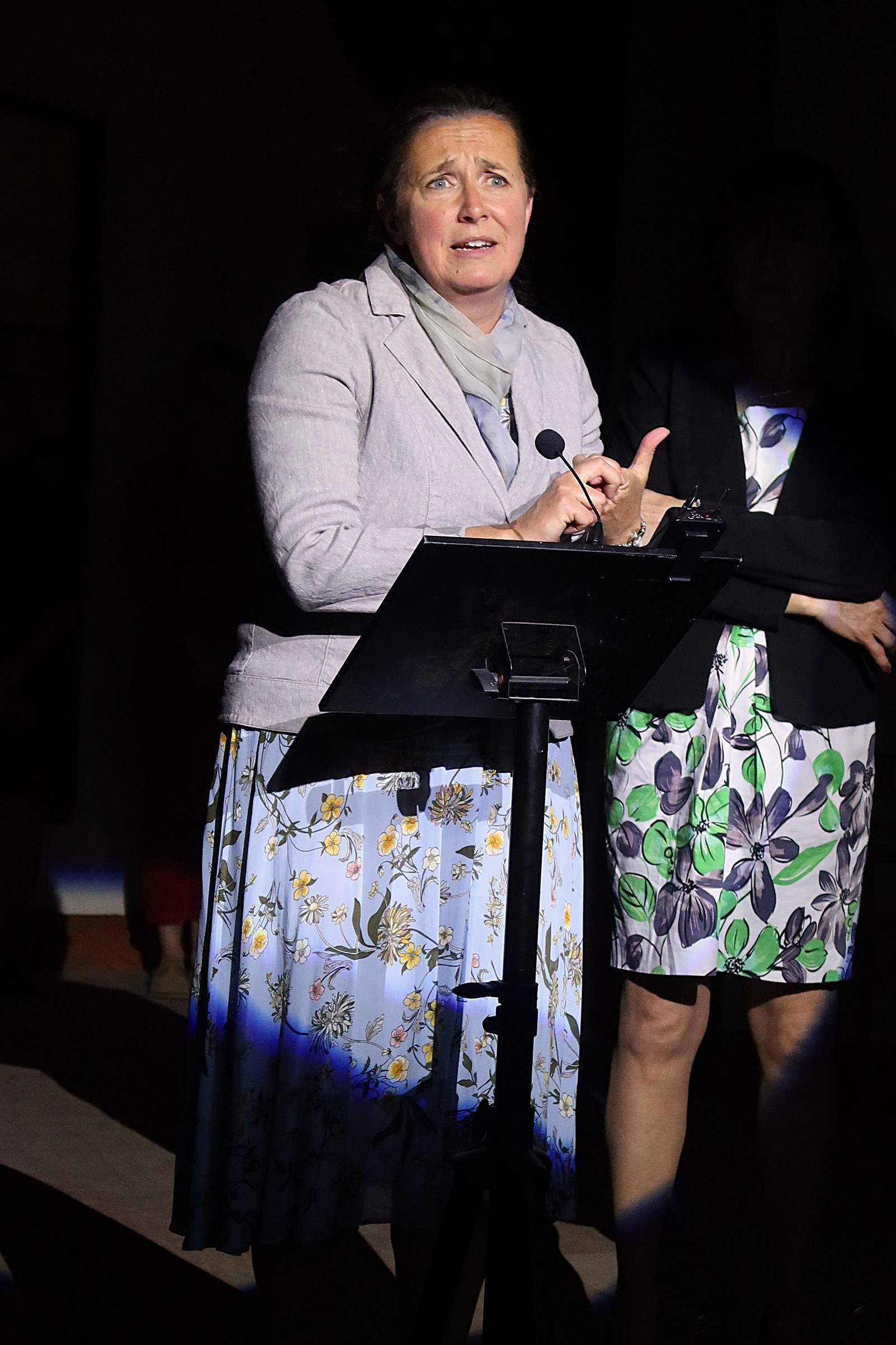
Christine Jones gave an honest and heartfelt performance as Annie, convincingly portraying her deep love for John, while Carol-Anne Tilley was delightfully spritely as retired teacher Jessie. Her revelation to Laurence that she had once been his teacher was played to perfection and earned plenty of laughs.
Liz Ramage brought confidence and sass to Celia, creating an entertaining rivalry with Chris throughout. Rachel Winslet-Morris offered a refreshing interpretation of Ruth, portraying her not as dowdy but as naïve and eager to please. This made her personal journey one of the most rewarding in the production, from timid housewife to a stronger, more confident woman, with her confrontation of her husband’s mistress earning well-deserved audience support.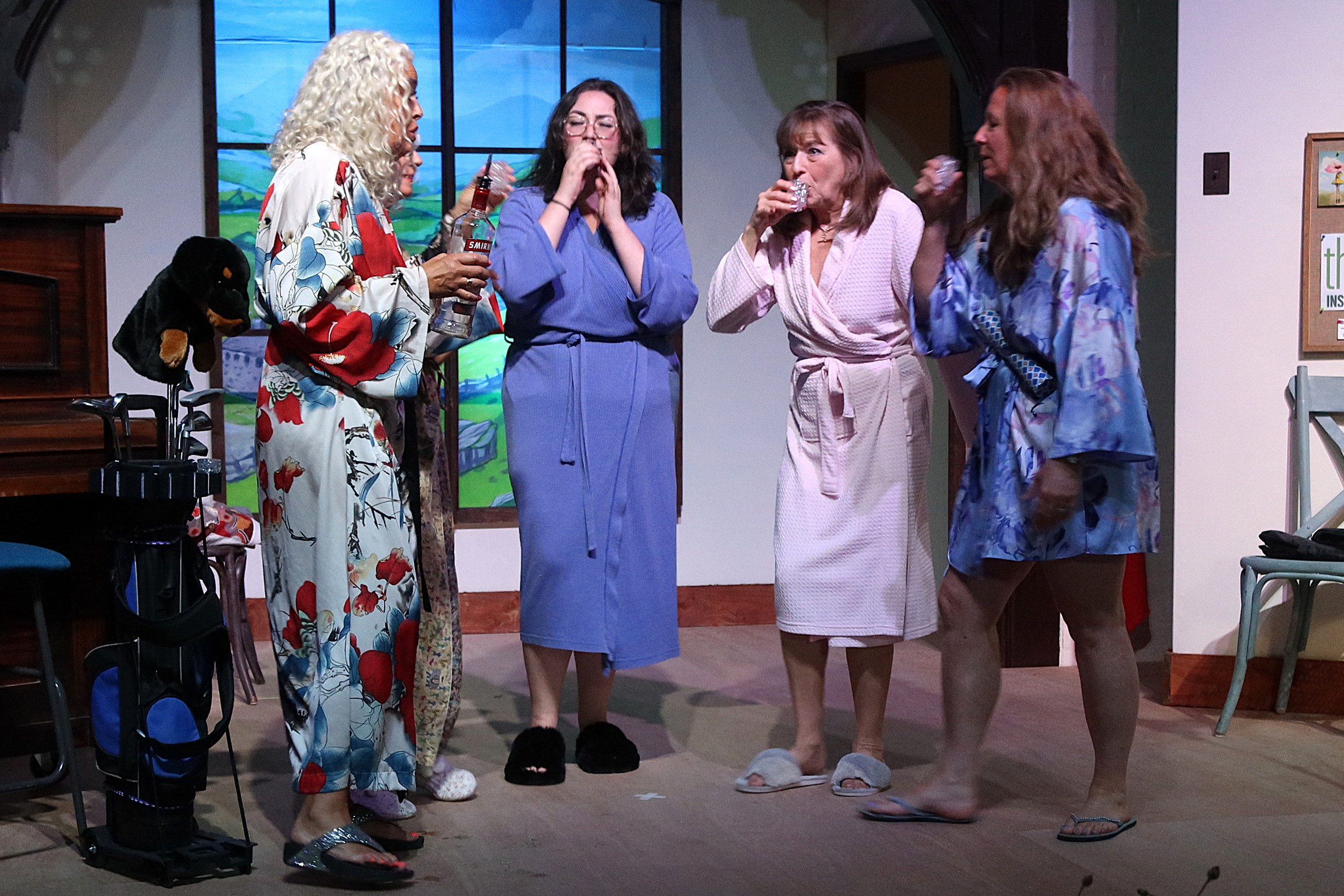
Ann Winslet was perfectly cast as the prim and organised Marie. She captured both the character’s devotion to standards and her horror at the calendar project, while also revealing the vulnerabilities beneath the surface. Her eventual acceptance of the group’s success culminated in a wonderfully exuberant delivery of “1-0, bloody brilliant!”
Ian Brace gave a sensitive and moving performance as John, portraying both his acceptance of his illness and his love for Annie with great sincerity. Mark Williams provided a solid foil as Chris’s long-suffering husband Rod, while Russell Bailey was excellent as the nervous photographer Laurence, clearly out of his depth among such a formidable group of women.
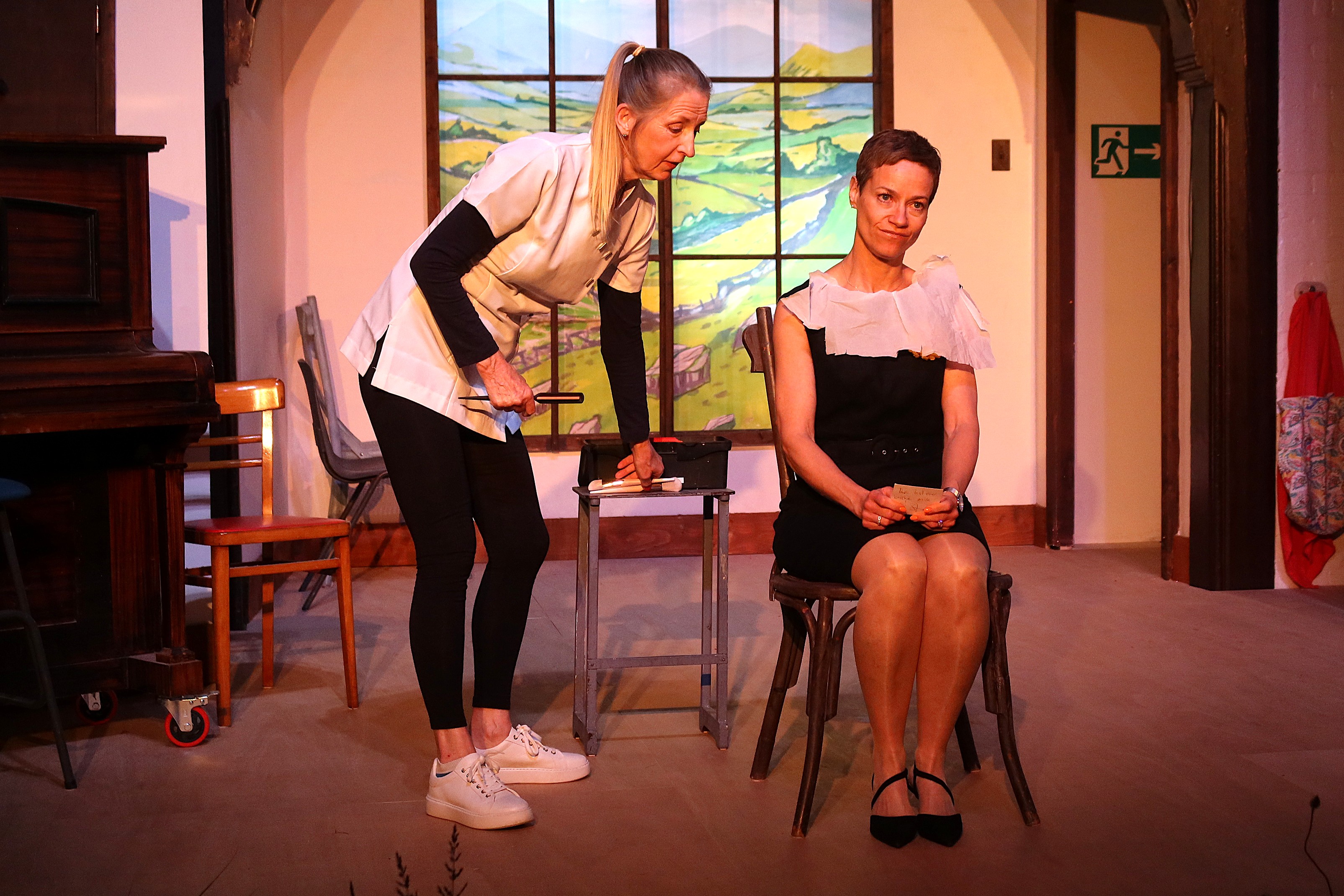 The supporting cast also made valuable contributions. Sally Bell was suitably snooty as Lady Cravenshire, while Catherine Fitzgerald took on the role of Elaine, the make-up artist who is revealed to be having an affair with Ruth’s husband – I do wish she used her make-up brushes properly though and not just tickled the air in front of Ruths nose, however, her confrontation scene with Ruth was particularly well handled, providing one of the Ruth’s defining moments. Bryn Bennett gave a commendable performance as the director of the doomed washing powder advert, making a confident debut appearance for DADS. And finally, special mention should go to Geoff Russell for his scene stealing cameo as Brenda Hulse, the relentlessly uninspiring speaker on vegetables. What could easily have been a throwaway role became a comic highlight thanks to his wonderfully earnest delivery, proving that even a talk on vegetables can be thoroughly entertaining in the right hands.
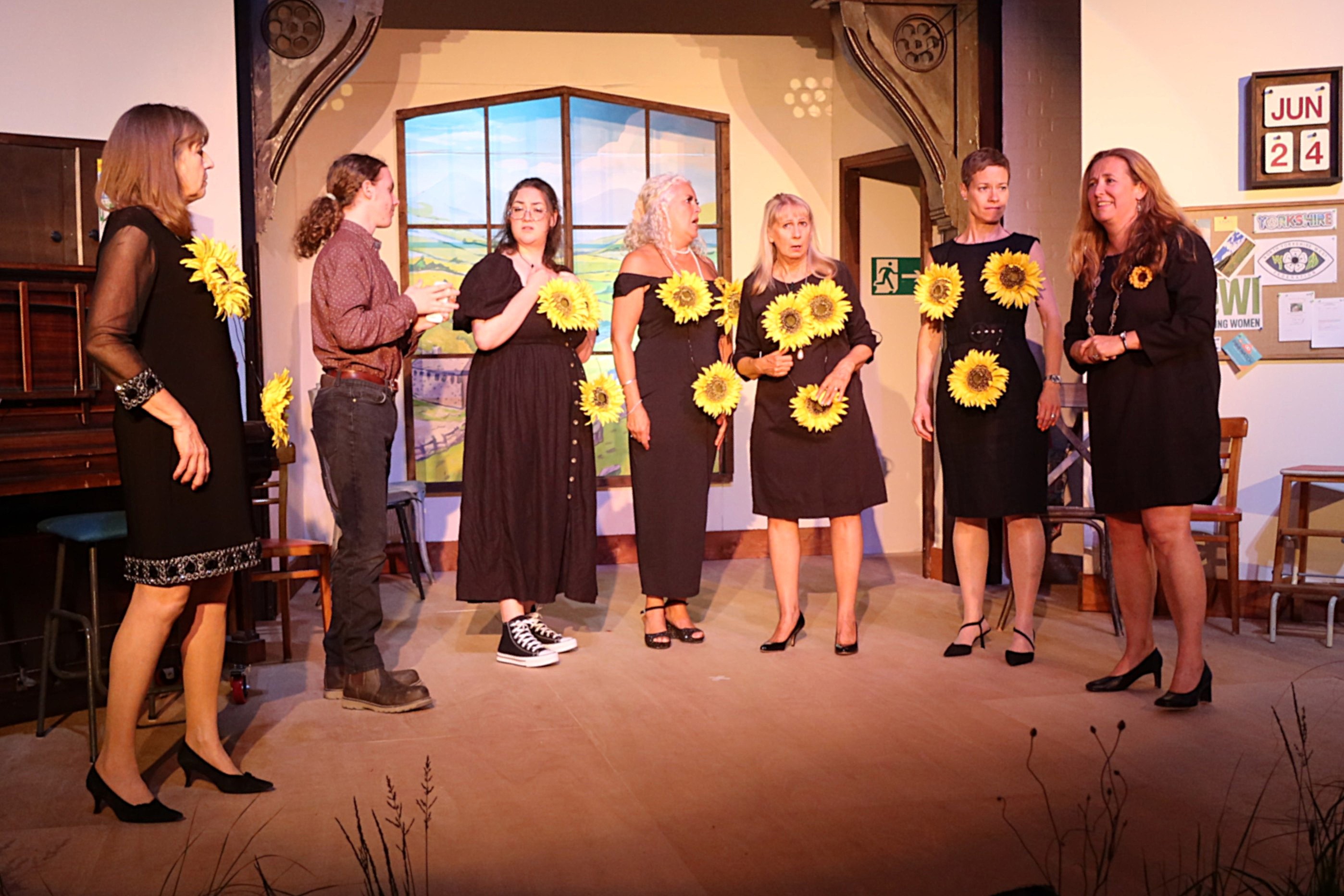
Overall, DADS should be extremely proud of this production. Calendar Girls is a play that demands humour, heart and honesty in equal measure, and this company rose to the challenge. Supported by imaginative staging, thoughtful direction and a cast of well-drawn characters, the production successfully balanced laugh-out-loud comedy with moments of genuine emotion. The calendar scenes, in particular, were handled with sensitivity and confidence, allowing the audience to appreciate both their humour and their significance to the story. This was an entertaining and moving evening of theatre that captured the spirit of Tim Firth’s much-loved play. Congratulations to Hayley Poole, her cast and the entire DADS team on a successful production.
Review reprinted from Dorchester news June 2026
As I walked into Dorchester Village Hall on a Friday evening in June, I was reminded of a visit to Back to the Future: The Musical at London’s Adelphi Theatre three years ago. Just as that theatre’s foyer transported audiences to 1955 America, Dorchester Amateur Dramatics Society whisked us away to Knapeley, Yorkshire. Sunflowers were everywhere—on T-shirts, at the bar, on the box office. It’s Tim Firth’s Calendar Girls and, by gum, we knew we were in safe hands. As the play opened with Jerusalem (naturally), we, the audience, all had chance to settle ourselves into Knapeley Village Church Hall. Gill Baish cleverly welcomes us into a village hall within a village hall with a few carefully placed details: the window through which we admire John’s Hill, the mishmash of chairs, an old-fashioned calendar bearing no bodies at all. This old-school calendar was moved on calmly by stage manager Jane Brooks in between scenes, reminding us gently that the seasons were moving on – hospital appointments are being ticked off and relationships are being tested. The stage – with its flowers, shrubs and stone steps created by Gill and the Pooles – was a thing of
beauty. I almost wanted to photograph the stage before the actors arrived. Were we about to watch a play or admire a piece of art?
From the get-go, we witness the love and banter between best friends Annie (Christine Jones) and Chris the florist (Louise Aukland). A special note goes out to this double act for their rapport, onerous line count, convincing accents and their comedic delivery. They convinced us they had been friends forever, and that friendship became the emotional heart of this production. The rest of the calendar girls were equally wonderful:
Lucinda Kenrick’s witty, grounded Cora, Carol-Anne Tilley’s Jessie (who later gets the biggest laugh with ‘no front bottoms!’) and Liz Ramage’s glamorous, flamboyant and fiercely loyal Celia. They are a breath of fresh air as they negotiate regular insights into ‘the Fascinating World of Broccoli’ from Brenda Hulse (aka Geoff Russell in an outrageously red dress). We enjoyed the
contrast to Ann’s Winslet’s buttoned-up Marie, with the weight of the world on her shoulders as she kow-tows to Sally Bell’s wonderful Lady Cravenshire.
Although a tale of female camaraderie, the friends are strongly supported by Chris and Annie’s partners and DADs regulars: Mark Williams as Rod and Ian Brace as John. Before we know it, John has a cancer diagnosis and the group later search for a way to raise money to replace a ‘man-eating sofa’ at the local hospital. The gentle, heartbreaking scene between the strong, brave Annie and an exhausted John, played with great tenderness by Ian Brace, moved many in the audience to tears. I never doubted we were watching a couple who had shared a lifetime together.
Many in the audience will have seen the 2003 film and wondered how on earth DADs would deliver the ‘making the calendar’ scenes without the smoke and mirrors at a film crew’s disposal. We needn’t have worried. Whether it was Hayley Poole’s direction, Gill and Elaine’s inventive costumes and props, the actors’ impeccable timing, or the lighting, the famous calendar scenes became the comic highlight of the evening. Every cry of ‘JULY!’ and ‘SEPTEMBER!’ was greeted with laughter, loud cheering and whoops of delight.
We went on a journey with Rachel Winslet Morris who gave a touching performance as vulnerable, unvalued Ruth, who can only get through the making of the calendar with firstly, Dutch courage, and later: carefully-placed tassels. We all cheered as she secures her good ending after all, reminding us that in life ‘not all of us are Chrises; some of us are Ruths’. secures her good ending after all, reminding us that in life ‘not all of us are Chrises; some of us are Ruths’.
Russell Bailey played shy Lawrence the photographer to a tee and delivered the line all film fans had been waiting for: ‘we’re going to need bigger buns!’. Catherine Fitzgerald and Bryn Bennett were both treading the boards for the first time, giving the play light relief and fresh blood.
This review would not be complete without taking a flat cap off to Simon Ratliff. I am getting goosebumps as I type, thinking back to the opening scene of Act Two: through the clever use of lighting, a microphone and echoing sound effects, we are no longer in Knapeley Church Hall but at the austere Annual WI Conference in the Albert Hall. Genius.
Congratulations to Hayley Poole on what is astonishingly her directorial debut. She clearly created a safe space in rehearsals and a production in which every performer felt confident enough to
shine, bringing warmth, humour and genuine emotion to every scene. If this is her first production, I cannot wait to see what she directs next.
Calendar Girls is ultimately a story about friendship, resilience and the extraordinary things ordinary people can achieve together. It feels especially fitting in uncertain times, both in the wider world and, as we’ve seen this summer, closer to home. Every performance was, I believe, a sell-out—and deservedly so. Productions like this don’t happen by accident. They rely on countless hours given freely by the DADS team of volunteers both on stage and behind the scenes. Every one of them should be enormously proud.
Thank you to the Dorchester News for inviting me to review the production (‘It needs to be reviewed by a woman!’ said Ian). I left with a smile on my face and renewed appreciation for what local theatre groups can achieve. By ‘eck as like, I take my carefully placed dressing gown off to you all.
Julia Sadler